

Start Strong: How Organized Content Boosts Your SEO
Ever spent hours perfecting a post only to see it get lost online? You are not alone. At SeoFlow, we have seen excellent content fall by the wayside because it lacked a clear structure. Organizing your words is not just about making them look neat – it guides search engines to know what matters most. When your ideas are laid out in a smart way, both readers and search tools can easily spot the key points, and your hard work earns better rankings.
"A good structure is not just about a neat layout – it shapes how search engines understand and rank your content."
A Quick Glance: How Good Structure Affects Your Results:
| Engagement Metric | Well-Structured Content | Poorly Structured Content |
|---|---|---|
| Average Time on Page | 2.3× longer (3:05 min) | 1:20 min |
| Bounce Rate | 28 % lower | 56 % |
| Scroll Depth | 70 % of article reached | 35 % |
| Conversion Rate | +22 % sign-ups | 10 % |
The True Impact of Organized Content
Good structure works like a clear map. It helps readers and search engines quickly understand your message. A smart layout not only gives a better user experience but also boosts your site in search rankings. Being organized turns a jumble of words into a tool that truly attracts visitors. Google and other search engines look at how ideas are arranged, not just at the keywords scattered in the text.
A neat layout does more than look nice. When visitors can find what they need quickly, they stick around longer, interact more, and often take action. These positive signals show search engines that your page deserves a higher spot. Also, using a clear set of headings helps search tools grasp how your ideas connect, making your page stand out when people search.
"When readers engage well with your content, search engines reward it with better rankings."
A clear structure can open doors for featured snippets and rich results. When you layout your content with proper headings, bullet points, and tables, you boost your chances of earning those prime spots. Our work at SeoFlow has shown that pages with a solid design often attract more visitors than jumbling ideas together. In short, a strong layout can be the game changer that makes your content shine.
There are strong tech benefits too. A well-organized page makes it easier for search engines to crawl and index your site correctly. It works better on mobile devices, which is very important now. Plus, a clear structure makes your page more accessible for everyone, including those who rely on screen readers. By organizing for better rankings, you create a more welcoming experience for all.
The Nuts and Bolts of Content Structure
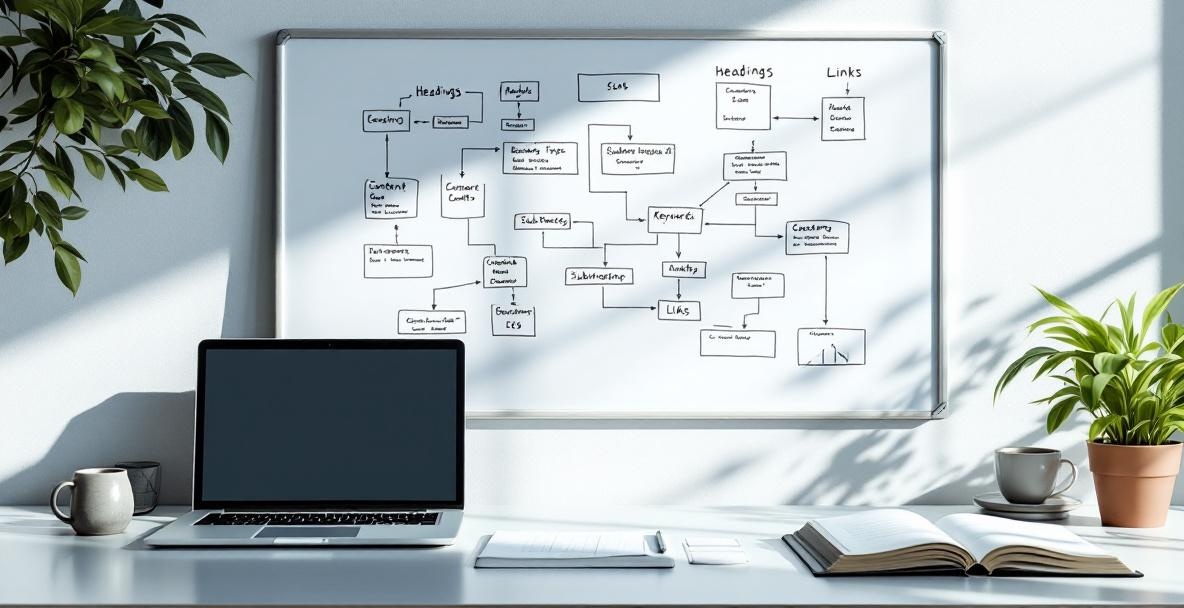
Before you try advanced tricks, you need to get the basics of how to organize your content. Picture your page like a building; without a solid foundation and clear framework, even a stylish design can collapse. At SeoFlow, we know that content with a smart layout not only pleases readers but also sends clear signals to search engines about its value. When your page is arranged logically, people stick around longer, interact more, and you earn a boost in rankings.
Understanding Content Hierarchies
Think of content hierarchy as putting your ideas in order, from the biggest point down to the small details. Just like a tree has a trunk, branches, and leaves, your page should have a main focus supported by extra points. This natural order helps readers follow your message easily and makes it clear how different ideas connect.
"Organizing your ideas from most important to least helps everyone understand your message."
| Heading Tag | Main Role | Example Best Practice |
|---|---|---|
| H1 | Shows the main topic | One unique H1 per page that matches search intent |
| H2 | Introduces key subtopics | Use keywords naturally without being too long |
| H3 | Groups detailed points | Great for questions, feature lists, or step-by-step guides |
| H4-H6 | Adds extra details | Only when needed to keep things clear |
When we build content optimization strategies for our clients, we start with a clear central idea and then add related points that back it up. Each part of your post should flow naturally from the big idea to the smaller details. This step-by-step layout not only makes your content easy to read but also shows search engines that you know your stuff.
Good layout follows the way we naturally think. By grouping similar ideas and showing how they connect, you give readers a quick snapshot of your main message. We have learned that most people scan a page before they decide to dig into the details, so a clear hierarchy makes it easier for them to decide to stay.
How Headings Guide Your Readers
Headings and subheadings work like signposts on a road trip. They break up long blocks of text and help you quickly see what the content is about. In web pages, using an H1 for your title, H2 for main points, and H3 for details creates a clear outline that both readers and search engines appreciate.
Besides making your page easy to read, good headings also tell search engines what your page is about. At SeoFlow, our smart content tools set up heading groups that work well for both SEO and user experience. We see that pages with clear headings often rank higher than those with missing or confusing headings.
Your headings should tell a clear story without being too wordy. They need to describe what comes next and naturally include key phrases. Imagine if someone just read your headings – if they get the main ideas, you are doing it right. This way, both humans and search engines can easily follow your message.
Don't forget that headings add a visual beat to your page. They break up the text and give your readers a chance to pause and absorb your content. This helps everyone, including those using screen readers, to navigate your page easily. It is one more reason why aligning your content with user needs is so important for both SEO and usability.
Top Tips to Boost Your Content Layout

Now that you know how a smart structure can change the game, here are some real tips you can use right away. At SeoFlow, we see that organizing your content is not about following strict rules; it is about creating an experience that both readers and search engines enjoy. These tricks will help you turn a long block of text into a page that grabs attention and drives more clicks.
How to Hook Readers from the Start
Your introduction is like a handshake – it either draws people in or sends them away. We know that within the first few seconds, readers decide whether to stick around or click off. A strong intro speaks directly to your reader's problem and hints at a solution, making an instant connection.
Kick off with a hook that grabs attention or taps into a common struggle. Instead of a plain statement like "Content structure is important," ask, "Ever wonder why some posts hold your attention while others do not?" This kind of question starts a real conversation right away. Then, give a quick preview of what they will learn so they know why it is worth their time, as explained here.
Keep your intro short and sweet. Aim for around 10% of your total word count – just enough to set the stage without delaying the good stuff. Our platform at SeoFlow can help you find the perfect length that fits your audience and topic.
Making Your Paragraphs and Sentences Easy to Read
Big chunks of text make readers lose interest. We notice that pages with shorter paragraphs, usually 2 to 4 sentences, work much better than long ones. It is not about simplifying your message; it is about ensuring your words are easy to digest when attention spans are short.
"Big blocks of text hurt your readability."
Mix up your sentence lengths so that most sentences stay under 20 words. This mix helps deliver your ideas clearly without overloading your reader. When you need to explain a tough idea, split it into smaller parts instead of one long sentence that can overwhelm.
| Visual Element | Use It When You Need To… | SEO/UX Boost |
|---|---|---|
| Bullet List | Sum up 3-7 related ideas quickly | Helps readers scan and can land you a snippet |
| Numbered List | Show step-by-step instructions or rankings | Guides search engines on ordered info |
| Image with Alt Text | Explain something tricky clearly | Improves relevance and pulls in image searches |
| Blockquote | Highlight a key point | Adds credibility and can encourage sharing |
Remember, white space is your friend. Short paragraphs give your page room to breathe, making it more welcoming. Our tools at SeoFlow even point out when text becomes too dense, helping you strike a perfect balance between detail and clarity. For more insights, check out this guide.
Making the Most of Visuals in Your Content
Visuals do more than look nice; they shape how people enjoy your page. Using images, bullet points, and other breaks wisely can help keep readers on your page longer – sometimes by as much as 40%.
Every image should work for you. Use pictures to explain tricky ideas, break long sections, or highlight key points. Always add descriptive alt text with relevant keywords to boost SEO. With the right compression, your images can actually speed up your page, which is key to expanding your reach.
Also, consider other formatting tools like bullet points, blockquotes, or callout boxes to spotlight important details. These cues help your readers quickly catch the main ideas, even if they only skim through. At SeoFlow, our smart content tools help you pick the best spots for these visual elements so that your page looks as good as it performs.
Watch Out for These Mistakes and How to Fix Them

Even the best of us can trip up when we organize our content for SEO. At SeoFlow, we have seen common errors that can weaken an otherwise strong strategy. Knowing about these mistakes is the first step to building content that truly works. Let us look at some common issues and practical ways to fix them.
Packing in Too Many Keywords
A big mistake is cramming too many keywords into your text. Stuffing keywords makes your writing feel forced and may even get your page penalized by search engines. Today, these tricks are easily spotted, and your page could suffer in rankings if overdone.
Instead of obsessing over keyword counts, focus on writing valuable content that uses key terms naturally. Use similar words and related phrases to enrich your message while keeping it natural. Our tools at SeoFlow help maintain a good balance – usually around 1-2% keyword density – so your text sounds authentic and answers what users want.
Keep in mind that search engines put user experience first. If your content truly answers questions and offers real value, the important words will fit in naturally. Place them smartly in your headings, intros, and summaries, but never force them where they do not belong.
Overlooking Mobile-Friendly Design
Since a large chunk of web traffic comes from mobile devices, not making your page mobile-friendly is a big mistake. A design that does not work well on phones can drive visitors away and hurt your search ranking.
Mobile optimization starts with how you structure your text. Long, dense paragraphs that work on a desktop can become overwhelming on a phone. Split your content into shorter bits, leave plenty of white space, and use clear headings to break up the text. This makes your page much easier for mobile users to read and enjoy.
Speed matters a lot on mobile. Heavy images, busy layouts, and too much coding can slow down your page, frustrating users and hurting your ranking. At SeoFlow, we suggest using a design that fits all screens, compressing images, and trying content templates made for mobile. Check your site's performance often with tools like Google's Mobile-Friendly Test.
According to recent research in content creation, designing your page with mobile users in mind is no longer just a good idea – it is crucial as search engines now favor sites that work well on smaller screens. This change reflects how more people are reading online using various devices.
The latest State of SEO Content report from Semji shows that a well-organized page can rank up to 60% higher than a messy one, even when both cover similar topics. This clearly proves why careful content layout is so important.
Recent studies on content structure show that search engines can spot pages that group topics logically and reward them. Clear topic clusters and a thoughtful hierarchy are key to making your content work for you.
Wrapping It Up: How Structure Boosts Your SEO
In this article, we looked at how organizing your content can seriously boost your SEO. From simple things like clear headings to advanced tactics that improve reader engagement, a strong layout is the backbone of a winning strategy. When you get it right, both search engines and your audience will enjoy your site.
What You Can Do Next
Now that you know how valuable a clear structure is, it's time to take action. Begin by checking your current content. Look at your top pages and see if they use smart headings, short paragraphs, and helpful visual breaks. Ask yourself: Are your H1 tags unique and clear? Do your H2s and H3s follow a natural order that makes sense to both people and search engines? Performing a content structure assessment can uncover quick wins for your site.
Then, create a checklist based on these tips. Your checklist might include things like optimal paragraph length, clear heading usage, smart internal links, and even schema markup opportunities. This framework helps keep your content consistent and makes updating faster. At SeoFlow, many businesses have boosted their SEO just by standardizing their layout.
Remember to keep mobile users in mind. Check how your page looks on different devices and make sure everything is easy to read and navigate on small screens. With search engines now using mobile-first indexing, a design that shines on phones and tablets is a must. You can also try some advanced content techniques to adjust your layout automatically for any device.
Lastly, know that keeping your content organized is an ongoing process. Regularly review and update your key pages, especially as search rules change. Watch for signs like bounce rates, time on page, and click-through rates to see if your design is working well. By aligning your content with search intent, you set off a cycle of higher rankings and happier readers.
Ready to transform your content structure and boost your SEO performance? Try SeoFlow today to automate and optimize your content creation process from keyword research to publishing, saving valuable time while ensuring every piece follows SEO best practices for structure and readability.